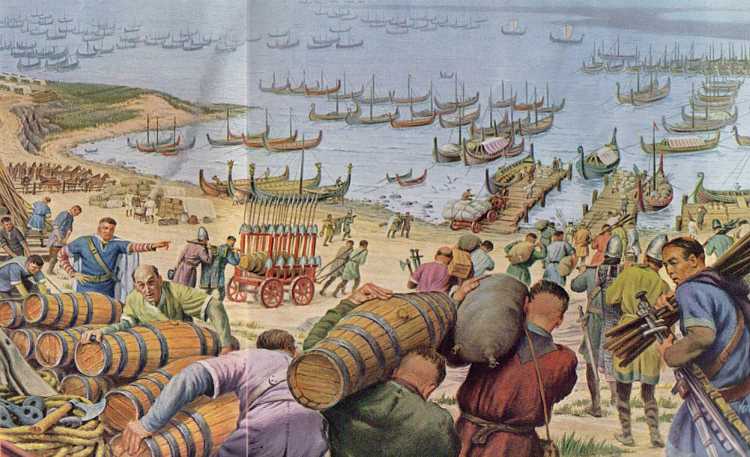
And it happens: the wind soon dies, to pick up again, only this time from the south. By nightfall, the whole fleet is waiting in mid Channel for the tide change again, which will carry the invasion fleet to England.
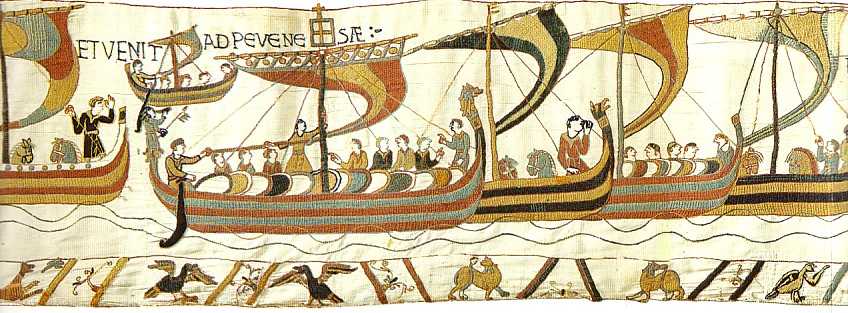
In the wee hours, you lower the sail, up anchor and then away across the dark water to England. You get to Pevensey bay well ahead of the other ships (which are more heavily laden than your flag ship). Pevensey is not defended. In fact, a scouting of the place reveals that there are no English troops at all in the vicinity. The locals tell you that king Harold has disbanded the army to get in the crops. You can hardly believe your good luck: your army will be able to disembark without resistance.
By nightfall, the fleet has moved a little further up the coast to Hastings and the disembarkation goes on all that night and into the following morning. While the army lands, you take your household knights on a scouting trip to assess the situation. The villagers have mostly fled, but those that you question can tell you no more than that the king has gone with the army to London. You return to camp at Hastings. After conferring with your commanders, you decide to:
March directly on London as soon as possible.
Pillage Sussex, which is part of Harold's domain: he will feel honor-bound to save his people, thus bringing on the battle that you desire as soon as possible.
Fortify your camp and wait for further news.